Current Projects
Salton Sea, California
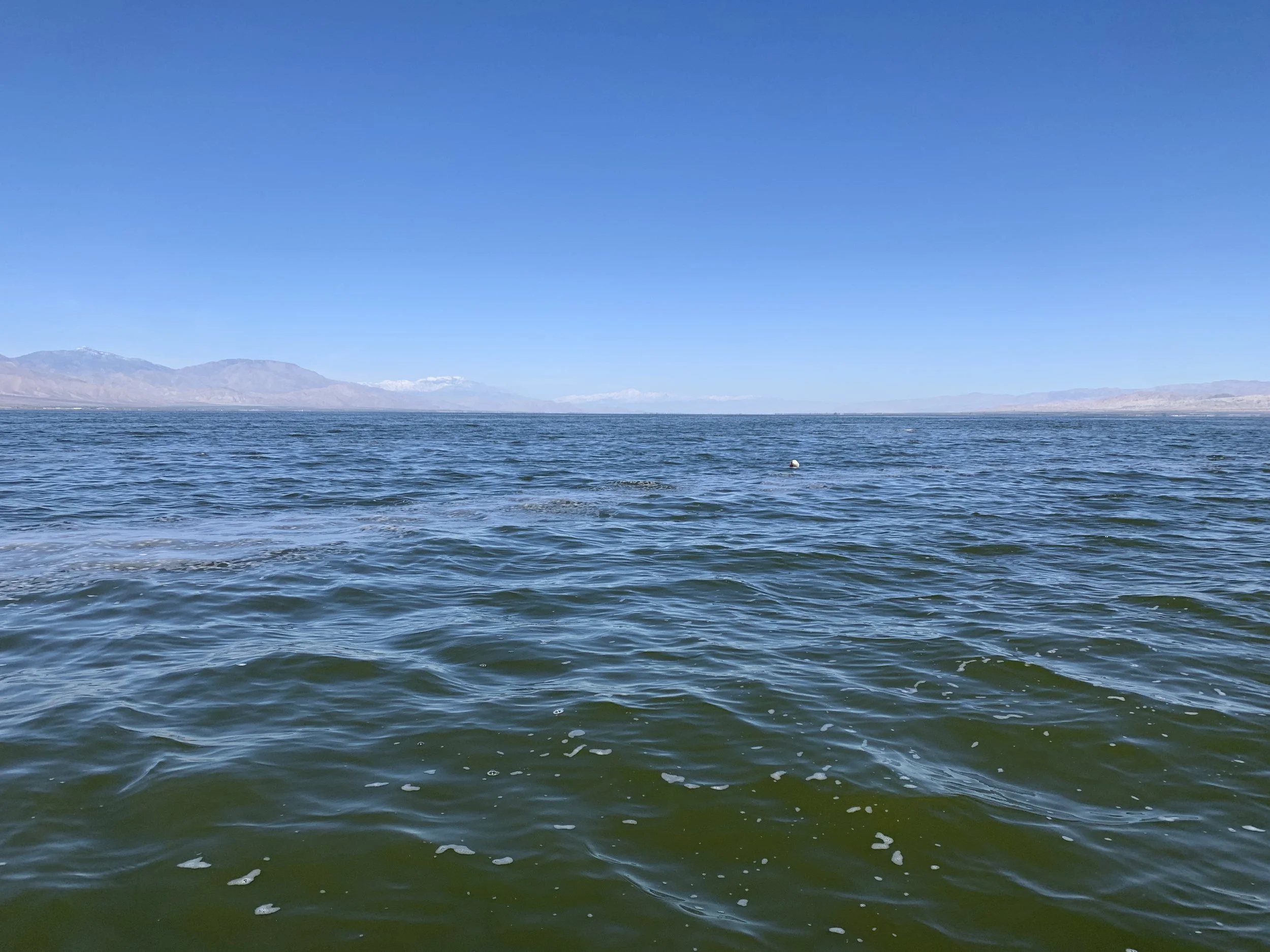
Located about a three-hour drive southwest of UCLA, the Salton Sea is a hypersaline, hypereutrophic lake that has become the center of significant environmental injustice. Contrary to the common belief that the Salton Sea is merely an accident of human activity, it has historically served as a basin for the fluctuating waters of Lake Cahuilla. Today, the Cahuilla Nation resides in the area alongside many Latinx and other communities, most of whom are increasingly vulnerable.
Air and Water Quality in the Salton Sea
In 2020, we helped organize a community science program designed to promote local water quality monitoring. This initiative evolved into a more comprehensive study of hydrodynamics, water quality, and air quality in the area, led by Diego Centeno from UCLA (link to his bio – will edit this once am able to publish*) and Alejandra López from Brown University. Both are PhD students who grew up around the Salton Sea and participated in the community science program.
We currently utilize data from three long-term moorings and two air quality monitoring stations that measure hydrogen sulfide concentrations (see Fig. 1). The water-based sensors we employ measure variables such as pressure, dissolved oxygen, conductivity, temperature, pH, nitrate concentrations, and current velocities. Our research aims to explore the connections between hydrodynamics, hypoxia, pH changes, and the release of hydrogen sulfide from the shallower areas of the Sea.
We strive to center the community in our work, although we recognize that we have much to learn and improve upon. To this end, we have collaborated with Alianza Coachella Valley and Dr. Kaily Heitz (link to her website) to conduct interviews, focus groups, and community workshops in the region. Currently, we are seeking funding to establish a more consistent community science advisory board and to provide summer internships for community members. If you or anyone you know would like to support this effort, please contact us.
This research is a collaboration with Brown University, Loma Linda University, and Alianza Coachella Valley. So far, it has resulted in two peer-reviewed publications (Centeno et al., 2023; Centeno et al., 2025) and two policy briefs (Márquez et al., 2025a; 2025b), with two additional publications forthcoming in 2026.
Santa Barbara, California
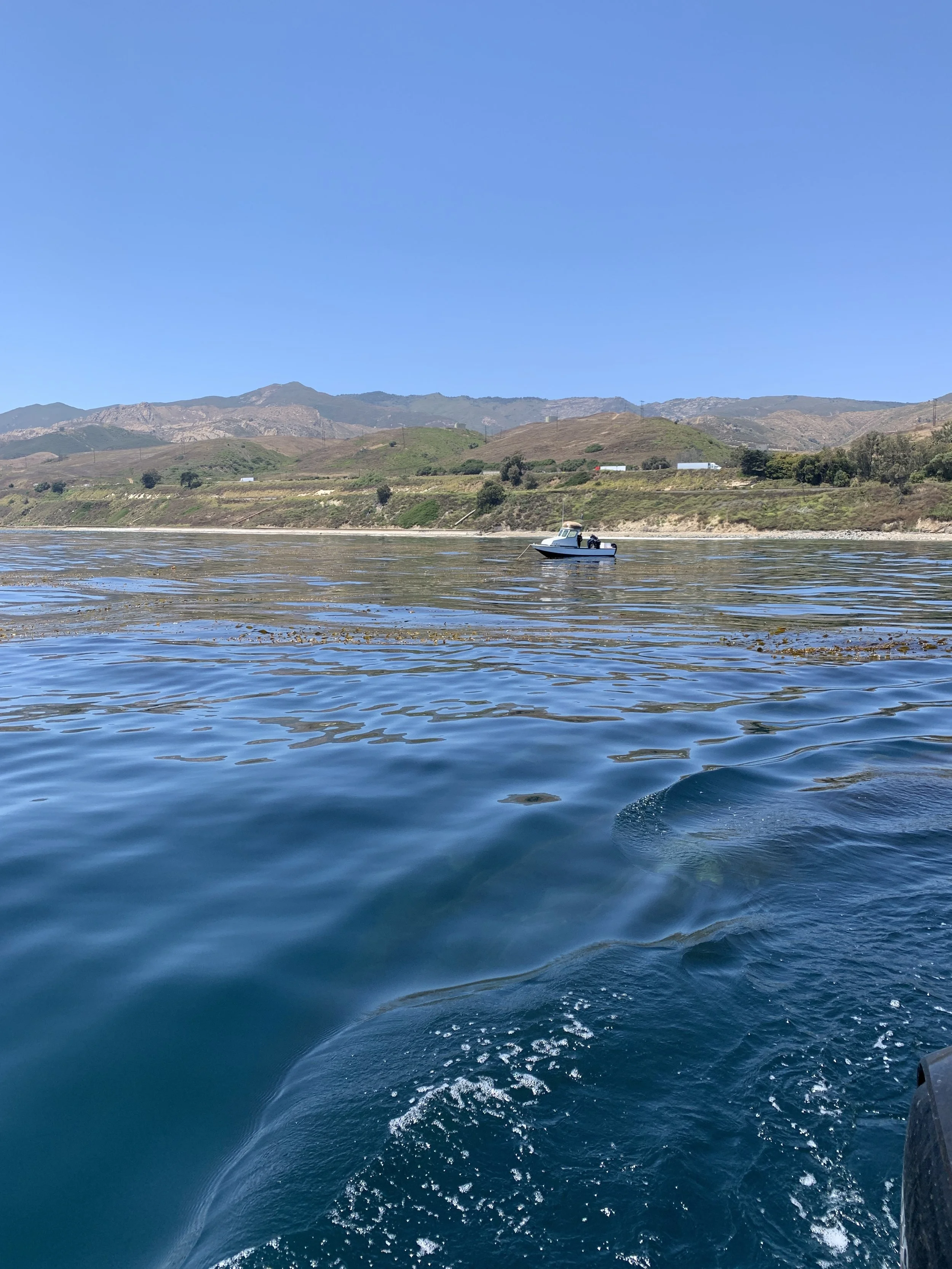
Kelp forests are highly productive coastal ecosystems that support fisheries, protect shorelines, and sustain marine biodiversity along the California coast. In recent years, widespread kelp loss driven by marine heatwaves, long-term warming, and intense sea urchin grazing has raised urgent questions about how these ecosystems recover and how organizations can make restoration efforts more effective.
Kelp recovery depends on the dispersal and settlement of microscopic spores, which are transported by ocean currents before attaching to the seafloor and growing into mature kelp. However, we need a better understanding of the hydrodynamic processes that control kelp spore dispersal, since the water flow within kelp forests is complex: dense kelp canopies slow currents, redirect circulation, and alter mixing in ways that are still poorly understood. These physical processes play a central role in determining where spores travel, where they settle, and whether they successfully recruit into new kelp plants.
Understanding these transport processes also has broader ecological implications. For example, the same currents that move spores could influence how kelp-derived carbon is retained within forests or exported to the surrounding ocean. Motivated by this and other reasons, we study kelp forest hydrodynamics to identify the physical controls on transport and to better understand the processes that shape kelp connectivity and recovery.
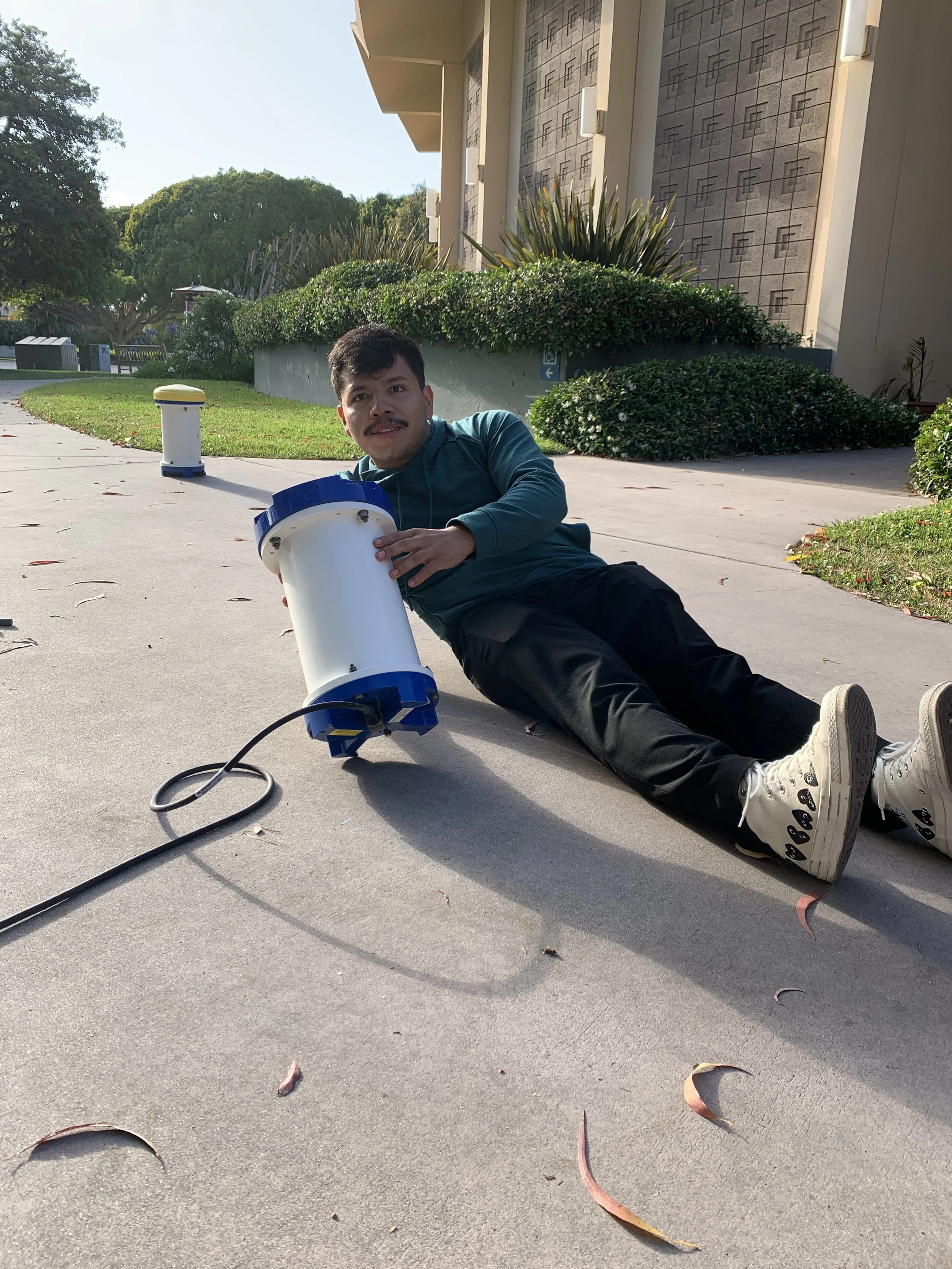
In July 2024, we conducted three submarine dye-release experiments using Rhodamine-WT to directly observe water transport within and around a kelp forest near Santa Barbara. We measured dye concentrations using moored fluorometers and transects from boats, kayaks, and surfboards. At the same time, we deployed instruments to measure currents, temperature, salinity, and pressure both inside and outside the kelp forest.
Ideally, we would use these observations to develop and validate high-resolution models of spore transport and retention within kelp beds, providing insights for restoration practitioners, resource managers, and tribal governments working to restore kelp forests in a changing coastal ocean. However, we are currently focusing only on the observations themselves and what they reveal about the complex hydrodynamics around kelp forests.
The primary student leading this work at UCLA is Eber Reyes López. This project is a collaborative effort involving partners from UC Santa Barbara, the Woods Hole Oceanographic Institution (WHOI), and UNC Wilmington.
Kelp Forest Hydrodynamics in Santa Barbara
The Coastal Communities Resilience Lab is eager to collaborate with communities and researchers in Puerto Rico to address resilience and adaptation challenges on the island. If anyone is interested in working together while prioritizing community needs, please get in touch.